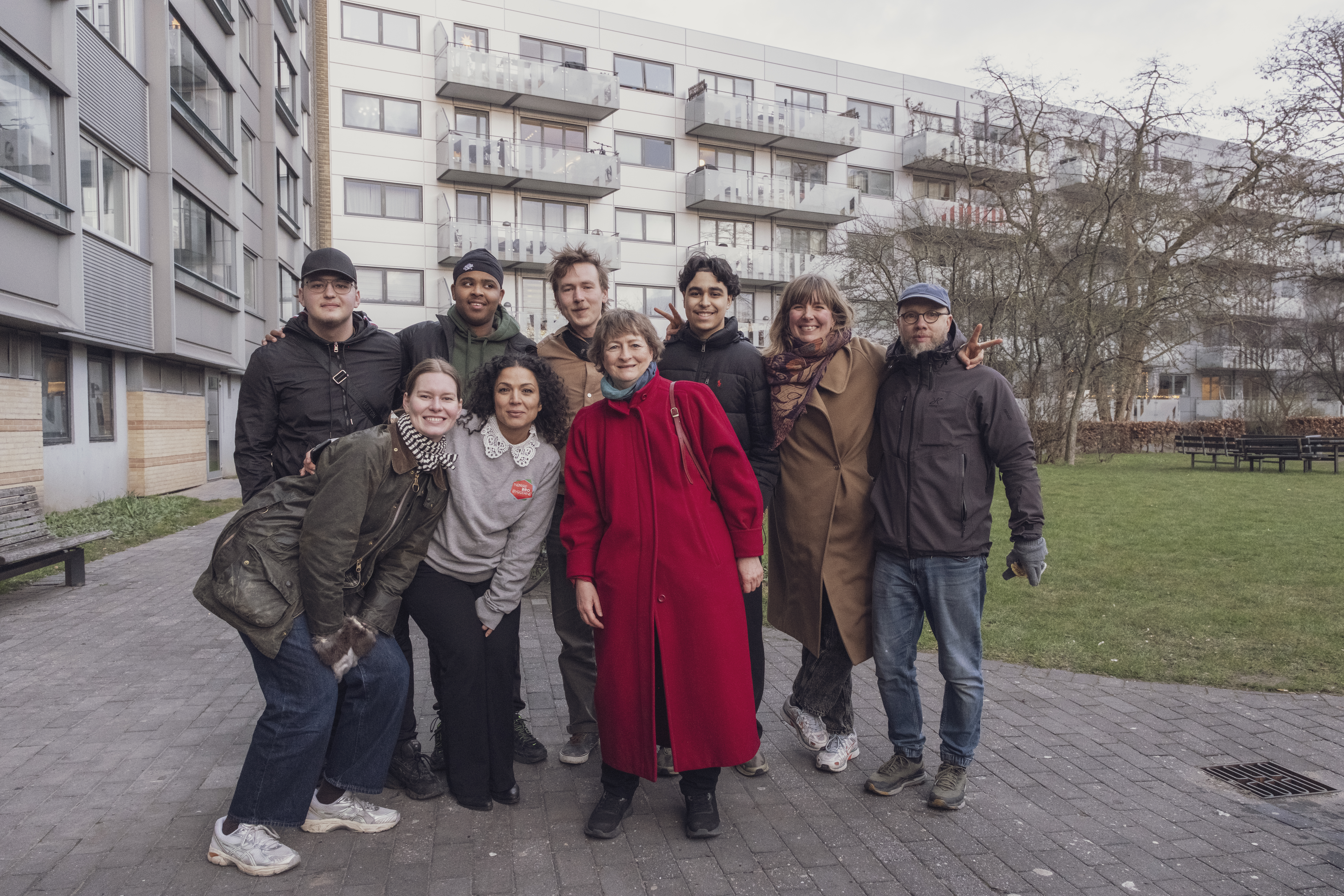
Young People Don’t Need a Seat at the Table. They Need the Tools to Build One.
What happens when young people are given the opportunity, the support, and the confidence to shape the places where they
This year, two projects that EIT Community New European Bauhaus (NEB) has supported along their journey have been named finalists in the New European Bauhaus Prizes 2026, both in the Champions strand, competing as Enablers for New European Bauhaus Transformation. Social Impact Generator Hub, a container-turned-innovation-lab in Nicosia’s UN buffer zone, and FURKAN Gdynia, a food-system knowledge network in Poland, show what happens when communities are given the space, funding and connections to turn a NEB idea into a working reality.
Both stories start differently and reach the same place: proof that sustainability, inclusion and good design are not abstract values but daily practice, and that EIT Community NEB’s programmes and funding played a real part in getting them there.

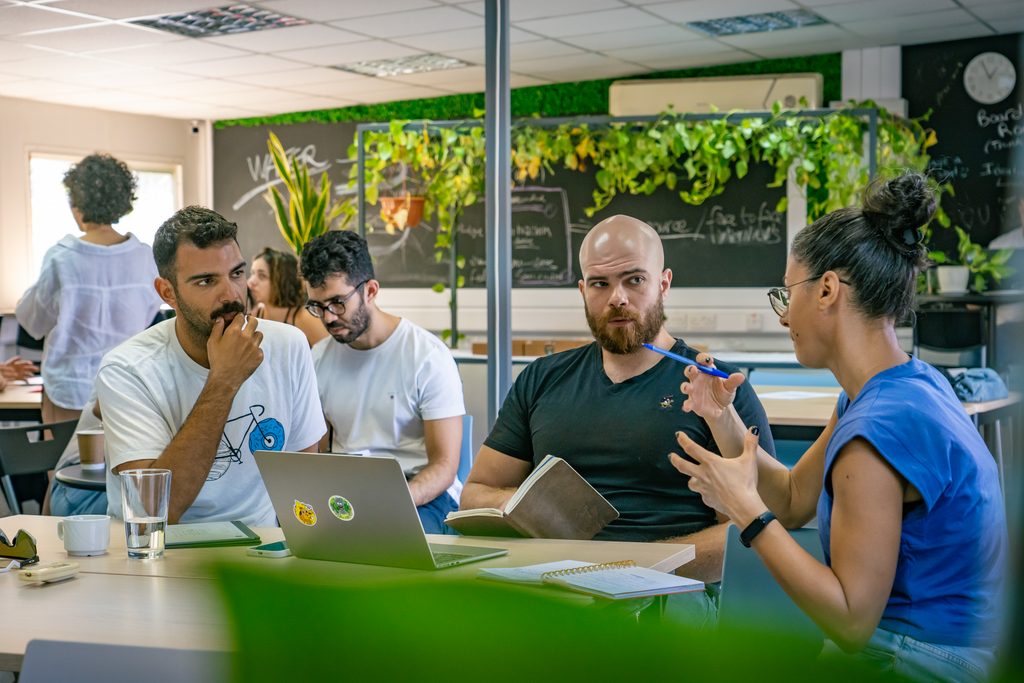
Social Impact Generator Hub turned a decommissioned UN peacekeeping container in Nicosia’s buffer zone – the line that still splits Europe’s last divided capital – into a neutral, cross-community innovation hub. Run by Social Impact Generator (also known as SocialTech Lab), the hub brings together conflict-affected youth and entrepreneurs from Cyprus and other regions facing social and territorial divisions, through accelerators, hackathons and mentorship programmes to co-create sustainable, NEB-aligned solutions.
The hub embodies all three NEB values at once: sustainability, through the adaptive reuse of the container itself and 250+ supported startups working in the circular economy and waste reduction; aesthetics and quality of experience, through a participatory design process that turned a symbol of division into a platform for collaboration. 60% of participants met someone from the other community for the first time through the programme; and inclusion, through free-of-charge programming, 40+ intercommunal initiatives and 50%+ female participation.
Since launch, the hub has delivered 150+ programmes to more than 7,000 community members, supported 500+ startup teams, distributed over €100,000 in direct startup funding, and helped its ventures raise €1.1 million+ in follow-on investment, generating 50+ jobs along the way. Ventures to come out of the hub include Pit to Table (tabletops made from discarded olive pits), NEEMA (vegan leather from prickly pear cactus), DERGON (3D-printed furniture from recycled plastic) and the Cyprus Food Hub, which tackles food waste and insecurity. The model has since been replicated in several other regions.
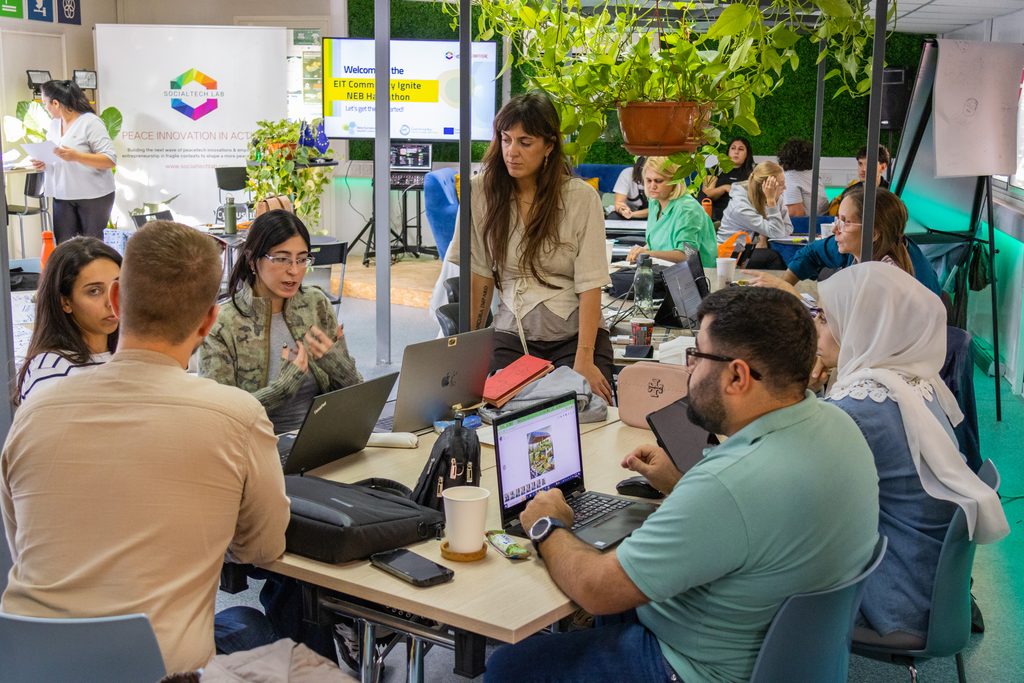
EIT Community NEB ran an Ignite NEB Hackathon at the hub, where 52 participants formed 14 multidisciplinary teams to tackle sustainable urban development challenges; the winning team went on to receive €20,000 in seed funding through the Grow NEB incubation programme. The hub also takes part in the NEBA South Hub of the New European Bauhaus Academy and partners with fellow EIT Communities EIT Food and EIT Urban Mobility. Beyond EIT, its funding mix draws on Horizon Europe, Erasmus+, UNDP, the U.S. State Department, the UK FCDO and the Stelios Foundation, split roughly 70% grants and institutional partnerships, 20% earned revenue (coworking and consulting) and 10% philanthropic giving.

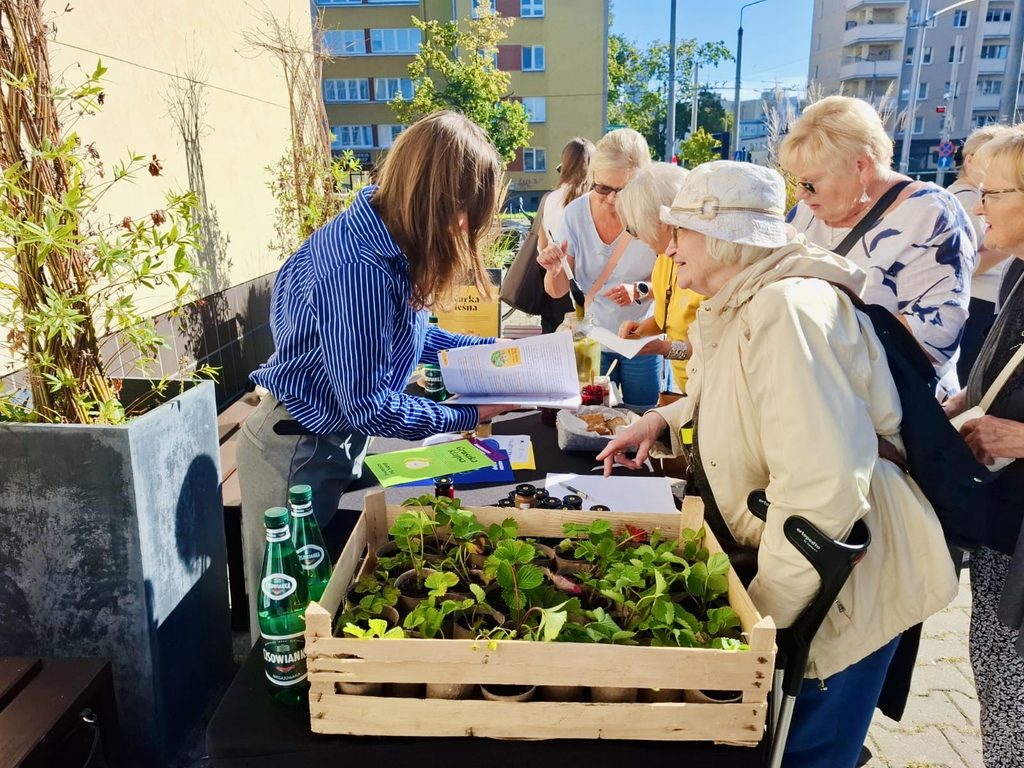
FURKAN Gdynia – short for Food Urban–Rural Knowledge Ambassadors Network – is a local initiative in Gdynia, Poland, and its surrounding municipalities (Kosakowo, Żukowo, Szemud, Wejherowo, Rumia and Reda), led by Małgorzata Piskórz Research / Busola Trends in partnership with the Municipality of Gdynia. It works through diagnosis, education, cooperation and public engagement to connect producers, residents, institutions and trained local ambassadors around more resilient, plant-based food systems.
On sustainability, the project tackles reduced chemical use, soil regeneration, water conservation and plant-based production, choosing solutions for both environmental benefit and economic feasibility for small-scale producers. On aesthetics and quality of experience, its educational trail boards and exhibits were co-designed with gardeners, educators and designers, weaving traditional Kashubian lace patterns and storytelling into the garden settings themselves. On inclusion, over 25% of participants were aged 65+, more than half of the trained ambassadors taking on leadership roles were women, and intergenerational workshops passed traditional food knowledge between seniors and younger participants.
FURKAN Gdynia grew out of a methodology first tested in Ostróda under the Connect NEB programme, and ran through to completion in November 2025. Diagnostic research surveyed 200 consumers, 100 producers and 25 experts to identify 30 local food-system challenges, from which 15 evidence-based good practices were selected through four co-creation workshops. The project trained 24 Food Urban–Rural Ambassadors, engaged 475 participants overall (304 through formal education and training), reached 52+ regional institutions with its findings, and worked with 23 family allotment gardens covering roughly 228 hectares. It produced a public diagnostic report for policymakers, an educational publication (550 copies), five illustrated trail boards, an interactive exhibit prototype at Gdynia Market Halls, and an online toolkit so other cities can adapt the model – two Polish regional capitals have already asked to run their own versions.
FURKAN Gdynia’s primary funder was EIT Community New European Bauhaus, through its Enhance NEB 2025 call within the EIT Food portfolio – a soft-investment grant that backed the diagnostic, educational and community-engagement work rather than a physical building project. That EIT Community NEB and EIT Food framework also connected the project to a European network of peers and gave its findings a route to national and regional institutions, including a relevant national ministry.

The New European Bauhaus Prizes celebrate projects that put sustainability, inclusion and beauty into practice. Now in their fifth edition, they have drawn more than 5,000 applications and awarded €1.54 million to 72 winners across Europe.
The NEB Prizes run two strands within each category: Strand A, Champions, for existing and completed projects with clear, positive results; and Strand B, Rising Stars, for concepts and prototypes from applicants aged 30 or under. Both Social Impact Generator Hub and FURKAN Gdynia are competing in Strand A, Champions.
On 15 October, we’ll know who the NEB Prizes 2026 jury picked. But whichever way that goes, Social Impact Generator Hub and FURKAN Gdynia have already won where it counts: in the people reached, the euros invested and the communities reconnected, and in showing the European Commission just how relevant the New European Bauhaus is in practice.
What happens when young people are given the opportunity, the support, and the confidence to shape the places where they

A new generation of start-ups is rethinking how we build, produce, move and live. Meet the 20 ventures of the 2026 Catalyse NEB cohort, challenging the status quo across sectors, from materials and energy to mobility, water, agriculture and healthcare, with sustainability, inclusivity and design at the core.