How to become an Ignite NEB 2026 host?
Learn how to apply to empower changemakers in your community and lead a local innovation journey. Join our Info Session
We use cookies on our website to enable the self-assessment tool, and to analyze website traffic by using Google analytics. By clicking ‘accept all’, you consent to our use of cookies and Google Analytics. You can find more information about the use of your data in our Privacy Policy.
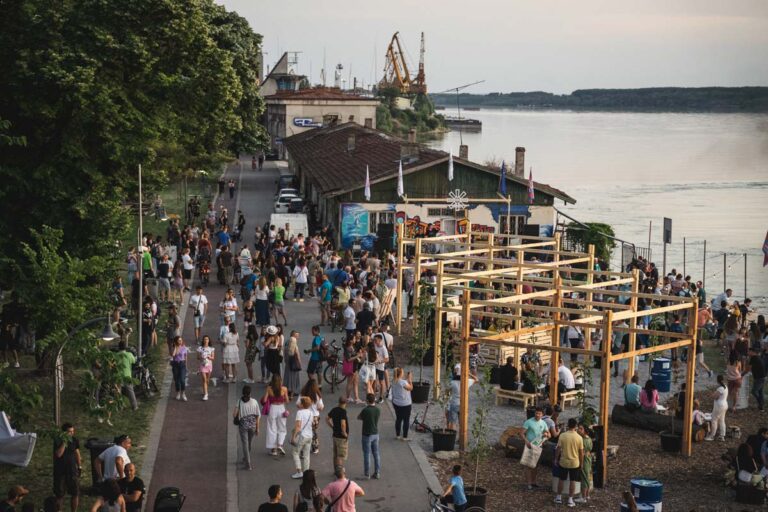
Across Europe, citizens are reimagining streets, gardens, schoolyards, housing, and public spaces. Not as passive users, but as co-designers and stewards of their local environments. In 2025, the Connect NEB Programme supported ten such initiatives, demonstrating the power of community-led action to translate the values of the New European Bauhaus (NEB) into tangible, place-based impact.
From dense urban neighbourhoods to peri-urban and rural contexts, Connect NEB projects worked at the intersection of sustainability, inclusion, and aesthetics, showing that meaningful transformation does not require large-scale infrastructure, but rather trust, collaboration, and the right support structures.
Individually, each Connect NEB project responded to a specific local challenge. Collectively, the cohort tells a much bigger story.
Across the ten projects:
These figures, while indicative, highlight what is possible when modest funding is paired with strong community engagement, mentoring, and peer learning.
Many Connect NEB projects focused on transforming underused or neglected spaces into living community assets.
Community gardens and green commons were co-created in cities like Sarajevo, Alnarp, and Chard (Green Connections, SERISS, CCG), while streets and neighbourhood spaces were re-naturalised through low-cost, resident-led interventions (Verde Bairro). In Athens, a community garden became Greece’s first nature-based urban climate shelter, offering cooling, biodiversity, and social connection in response to extreme heat (Petroupoli Climate Shelter). In Bologna, citizens and experts co-designed nature-based water management solutions, adapting plans to complex regulatory realities (WaterWise Community).
Rather than finished “projects”, these spaces were designed as adaptable, stewarded environments, intended to evolve with their communities.
Beyond physical transformation, Connect NEB projects delivered strong social impact.
Across the cohort, citizens reported increased confidence, ownership, and a stronger sense of belonging. Intergenerational approaches were particularly powerful: children, young people, adults, and seniors worked side by side through gardening, cooking, design, and creative practices (PLANT, Green Connections, CCG). These processes helped reduce isolation, strengthen trust, and create new social networks that continue beyond the project timeframe.
The lesson is clear: how projects are delivered matters as much as what they deliver.
A defining feature of Connect NEB is its emphasis on capacity-building. Projects didn’t just implement activities — they built skills, confidence, and agency.
Participants engaged in non-formal education on topics ranging from climate adaptation and food systems to cooperative governance and participatory design (HUGS, PLANT, SERISS). Several projects also produced toolkits, guidelines, policy recommendations, and participatory maps that extend learning beyond their local context (Vilnius Green Living Lab, Creating to Live Together, Green Connections).
In 2025, the programme strengthened this learning dimension through a workshop-based Mentorship Programme, bringing project partners together to learn from experts and from each other — fostering a genuine sense of cohort and shared purpose.
While policy change was not the primary objective, many projects engaged directly with municipalities, schools, and decision-makers, positioning citizen-led action as a credible input to planning and governance.
Projects shared results with local authorities, contributed policy recommendations, and explored how pilots could inform future strategies. Examples include:
Together, these efforts show how community-scale experimentation can inform institutional learning, even without formal policy adoption.
Looking ahead, many Connect NEB projects are moving from pilots to longer-term stewardship, embedding their work within communities, schools, or municipal frameworks. Others are exploring replication in new neighbourhoods or scaling through networks rather than standardised models.
At programme level, these trajectories reinforce the role of Connect NEB as:
The 2025 cohort demonstrates that community-scale action can generate systemic insight. When citizens are trusted as co-designers – and supported through mentoring, peer learning, and visibility – they deliver solutions that are not only locally meaningful, but also transferable and inspiring.
Connect NEB is not about one-off projects. It’s about building the conditions for long-term, inclusive transformation, one neighbourhood at a time.
Learn how to apply to empower changemakers in your community and lead a local innovation journey. Join our Info Session
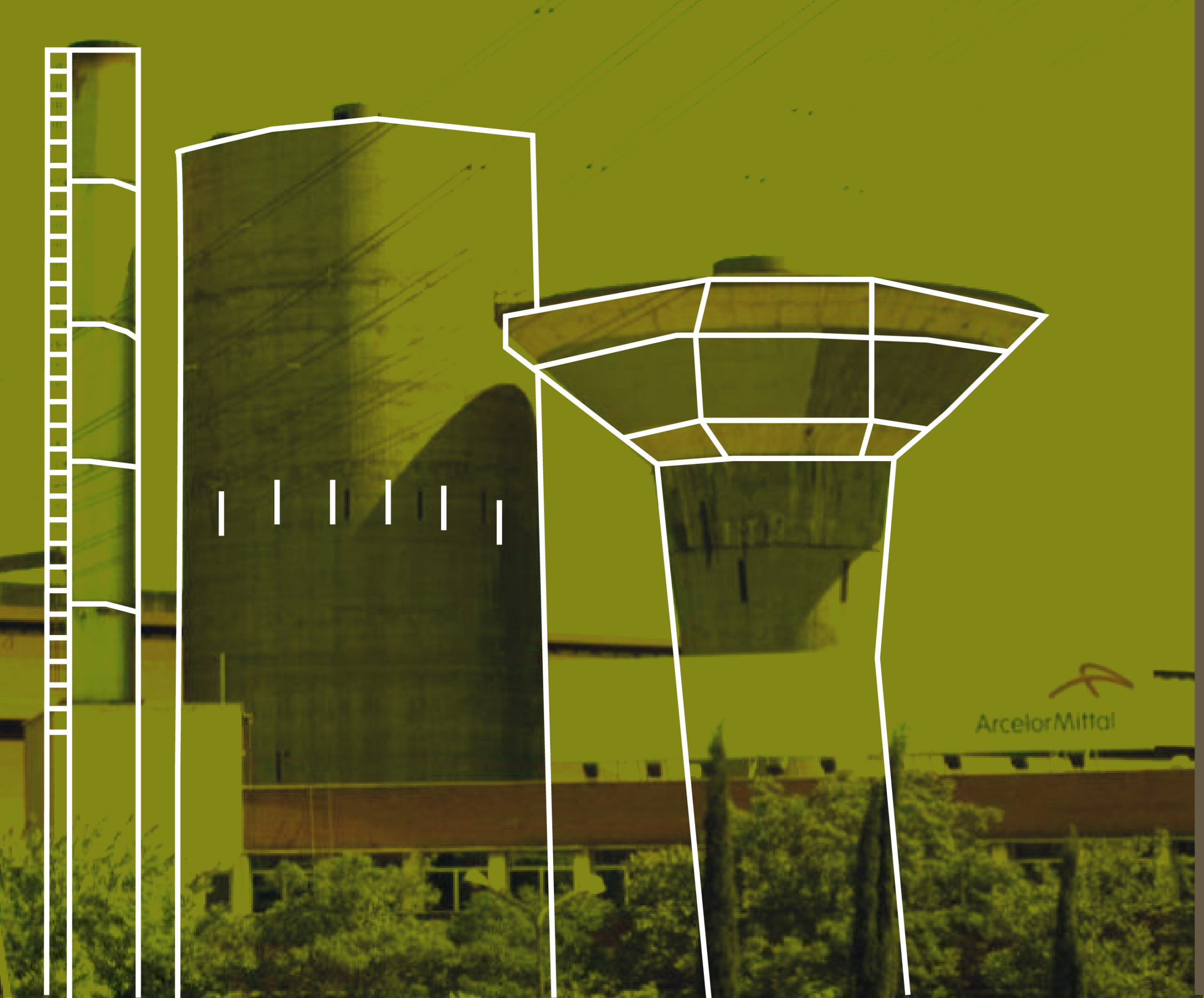
How co-creation can help transform industrial spaces into more inclusive, sustainable and resilient places.